


7 Best Eco Friendly T Shirt Printing Methods for 2025
Sustainable fashion is booming as more people demand clothing that respects the planet. Yet, many don’t realize that traditional t-shirt printing can be tough on the environment, relying on harsh chemicals, wasteful water use, and unsustainable materials. If you’re looking for eco friendly t shirt printing options, you’re in the right place. This guide uncovers the 7 best methods for 2025, sharing innovative techniques, their pros and cons, and practical tips to help brands and creators choose the most sustainable solution.
Why Eco-Friendly T-Shirt Printing Matters in 2025
The shift toward eco friendly t shirt printing is not just a fleeting trend, it is a powerful movement shaping the future of apparel. In 2025, sustainability is at the heart of fashion, driven by changing consumer values, environmental urgency, and industry innovation. Let us explore why eco friendly t shirt printing is more crucial than ever.

Growing Consumer Demand for Sustainable Apparel
Today’s shoppers are changing the rules. Around 75 percent of Gen Z says they care more about sustainability than brand names when buying clothes. This generation, along with Millennials, is leading a wave of eco conscious purchasing. People are asking tough questions about where their apparel comes from and how it is made.
Brands cannot ignore this demand. Sustainable fashion is not just a buzzword, it is a market force. According to Sustainable Fashion Market Growth Projections, the eco apparel market is expected to soar in the coming years. For anyone in the industry, choosing eco friendly t shirt printing is now a smart way to earn trust and stay ahead.
Environmental Impact of Traditional Printing Methods
Conventional t-shirt printing methods have a heavy environmental price tag. Screen printing, for example, uses gallons of water and leaves behind chemical waste that pollutes waterways. Plastisol inks, a common choice, release harmful VOCs into the air, affecting both workers and the planet.
The carbon footprint does not stop there. Many traditional processes use a lot of energy, from heating presses to powering large production lines. By switching to eco friendly t shirt printing, brands can cut down on waste, reduce pollution, and help protect natural resources for future generations.
Regulatory and Industry Trends
In 2025, the rules of the game are changing fast. Governments worldwide are rolling out tougher environmental regulations aimed at cleaning up textile and garment production. Certifications such as GOTS, OEKO TEX, and Fair Trade are becoming the new standard for responsible brands.
Major names in the industry, like Stanley Stella and Econscious, are setting examples by adopting eco friendly t shirt printing methods. These brands prove that meeting regulations is not just about compliance, it is a chance to lead the market and inspire positive change.
Benefits for Brands and Creators
Embracing eco friendly t shirt printing brings a wealth of rewards. Brands that prioritize sustainability enjoy a stronger reputation and deeper customer loyalty. Shoppers are more likely to return to companies that align with their values.
There is also a competitive edge. In a crowded market, offering eco friendly t shirt printing can differentiate a brand. Plus, reducing water and energy use can lead to real cost savings. Creators and businesses have the chance to innovate, save money, and make a positive impact all at once.
7 Best Eco Friendly T Shirt Printing Methods for 2025
Eco friendly t shirt printing has rapidly evolved, bringing a wave of innovation to the fashion world. In 2025, brands and creators have more sustainable options than ever before. From water-based inks to advanced digital techniques, each method delivers unique benefits for both people and planet.
Curious which method fits your brand’s values and goals? Let’s explore the 7 best eco friendly t shirt printing methods, breaking down their processes, real-world examples, and what sets each apart.
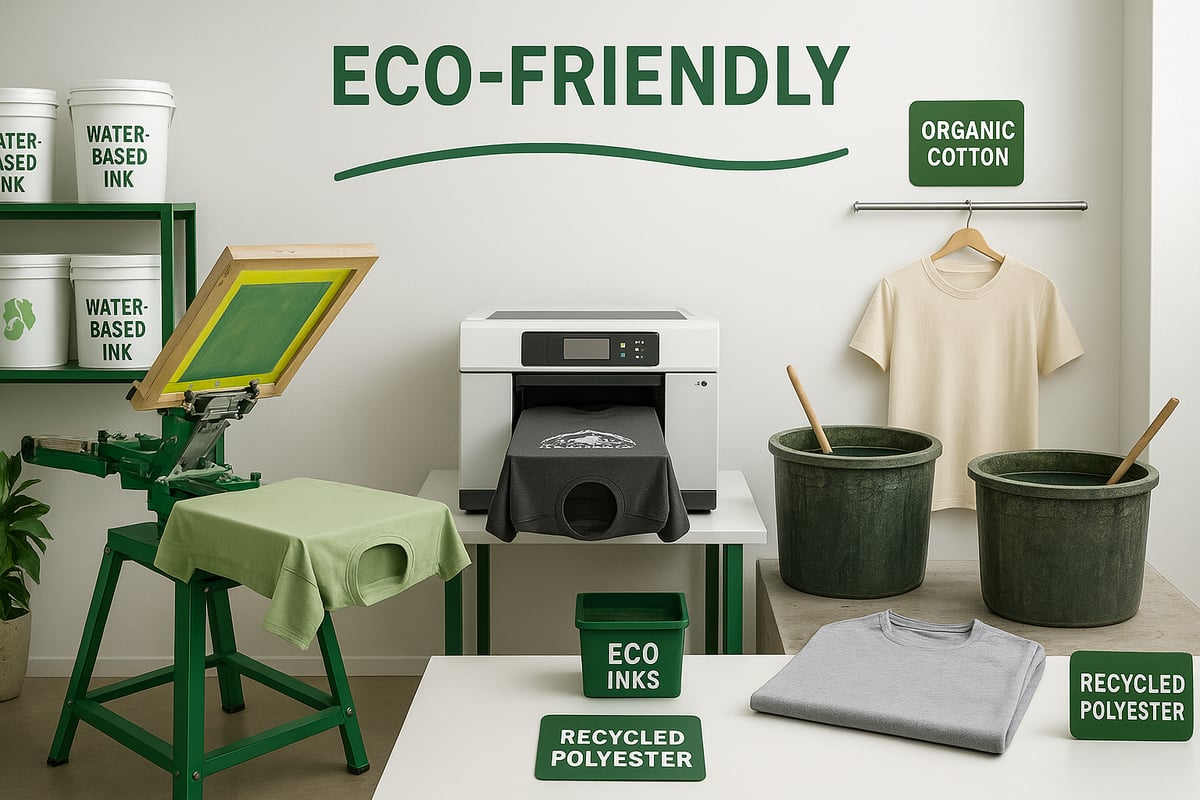
1. Water-Based Screen Printing
Water-based screen printing is a cornerstone of eco friendly t shirt printing. Unlike traditional plastisol inks, this method uses water as the ink carrier, cutting down on toxic chemicals and making cleanup a breeze.
The process produces prints that are soft and breathable, ideal for organic cotton shirts. Water-based inks soak into the fabric, creating a smooth hand feel rather than a thick layer on top. This makes for shirts that are comfortable and environmentally conscious.
Brands like Bella + Canvas proudly use this method, proving that eco friendly t shirt printing can scale for both small and large runs. Cleanup requires less harsh solvents, reducing water waste and environmental impact.
Pros:
- Soft, breathable prints
- Lower environmental footprint
- Compatible with eco certifications
Cons:
- Colors may be less vibrant on dark fabrics
- Requires precise curing and a learning curve
Water-based screen printing is a solid choice for brands seeking eco friendly t shirt printing with a classic touch and modern sustainability.
2. Digital Direct-to-Garment (DTG) Printing with Eco Inks
Digital direct-to-garment (DTG) printing has revolutionized eco friendly t shirt printing. Instead of screens, DTG uses advanced inkjet technology to print designs directly onto fabric.
The latest DTG printers use water-based, non-toxic, and even biodegradable inks. This means less waste and no need for harsh chemicals or screens. It’s perfect for on-demand models and small batch orders, where customization and detail are key.
Printify and similar companies are leading the way with DTG eco lines. These prints are high-resolution, vibrant, and ideal for detailed artwork. Since there’s less setup, energy and water use drop significantly, making this a standout for eco friendly t shirt printing.
Pros:
- High-quality, detailed prints
- Great for custom and small orders
- Lower energy and water use
Cons:
- Slower for large runs
- Best on 100% cotton or eco blends
For those wanting to stay on the cutting edge, advancements in eco-friendly printing technologies continue to make DTG a top pick for eco friendly t shirt printing.
3. Discharge Printing with Eco-Friendly Agents
Discharge printing offers a unique twist on eco friendly t shirt printing. Water-based discharge inks remove the shirt’s original dye and replace it with a new color, creating a print that feels like part of the fabric.
Today’s discharge agents are greener than ever, reducing toxic byproducts. The result is a soft, vintage-style print that’s especially breathable—perfect for organic and recycled cotton garments.
Sustainable brands often use this for limited editions and soft, muted designs. However, discharge printing requires careful control and works best on dark 100% cotton fabrics.
Pros:
- Softest possible print
- Breathable and sustainable chemistry
- Minimal ink layer
Cons:
- Limited to certain fabrics
- Requires expertise for consistent results
Discharge printing is ideal for brands focused on unique, eco friendly t shirt printing with a worn-in, artisan feel.
4. Natural Dye and Botanical Printing
Natural dye and botanical printing take eco friendly t shirt printing to an artisanal level. Instead of synthetic pigments, these methods use plant-based dyes from roots, leaves, and flowers.
This low-impact process uses minimal water and skips synthetic chemicals entirely. Each shirt is a one-of-a-kind creation, with earthy tones and organic patterns that connect wearers to nature.
Small-batch brands use indigo, madder, and turmeric for rich, natural hues. While colorfastness can vary, the environmental benefits are clear: 100% biodegradable prints and zero toxic runoff.
Pros:
- Fully biodegradable and toxin-free
- Unique, handmade appeal
- No synthetic chemicals
Cons:
- Labor-intensive and time-consuming
- Colorfastness and scalability are limited
Natural dye printing is perfect for limited runs and brands that want their eco friendly t shirt printing to tell a story.
5. Sublimation Printing with Recycled Polyester
Sublimation printing stands out in the world of eco friendly t shirt printing, especially for recycled polyester fabrics. This process uses heat to transfer eco inks onto the material, with no water required.
The result is a vivid, durable print that feels like part of the shirt—no heavy ink layer. This is ideal for activewear and all-over prints, especially with the rise of GRS-certified recycled polyester tees.
Many sustainable sportswear brands now use sublimation to create eye-catching designs while keeping waste and water use low.
Pros:
- No water waste
- Long-lasting, vibrant prints
- Supports fully recyclable garments
Cons:
- Only works on polyester fabrics
- Not suitable for cotton or natural fibers
Sublimation is a game-changer for brands offering eco friendly t shirt printing for performance and recycled apparel.
6. Eco-Friendly Heat Transfer Printing
Eco friendly heat transfer printing offers flexibility for custom graphics and small orders. This method uses non-toxic, phthalate-free films and water-based adhesives, reducing the environmental load.
It requires less energy and produces almost no waste compared to traditional transfers. In 2025, biodegradable transfer materials are making this technique even greener.
Brands use heat transfer printing for detailed logos and graphics on organic tees and tote bags. While the hand feel can be less soft than direct printing, it’s a strong option for personalization.
Pros:
- Versatile and low energy
- Minimal waste production
- Good for custom, small runs
Cons:
- May not feel as soft as direct prints
- Durability can vary by material
Heat transfer is a smart choice for brands seeking flexible, eco friendly t shirt printing with a modern edge.
7. Reactive Dye Digital Printing
Reactive dye digital printing is the high-tech star of eco friendly t shirt printing. This process uses reactive dyes in closed-loop water systems, recycling water and minimizing waste.
It delivers vibrant, colorfast prints on natural fibers like organic cotton, hemp, and bamboo. Both large and small runs benefit from efficient dye use and reduced environmental impact.
High-end sustainable brands use this for premium collections, taking advantage of the high-quality color and scalability.
Pros:
- Vibrant, durable prints
- Eco-optimized, closed-loop process
- Scalable for big or small runs
Cons:
- Requires specialized equipment
- Higher initial investment
Reactive dye digital printing is ideal for brands ready to invest in top-tier, eco friendly t shirt printing for natural fabrics.
Key Factors to Consider When Choosing an Eco-Friendly Printing Method
Choosing the right eco friendly t shirt printing method shapes your brand’s environmental impact, product quality, and customer satisfaction. Let’s break down the essential factors every brand and creator should weigh before making a decision.
Material Compatibility
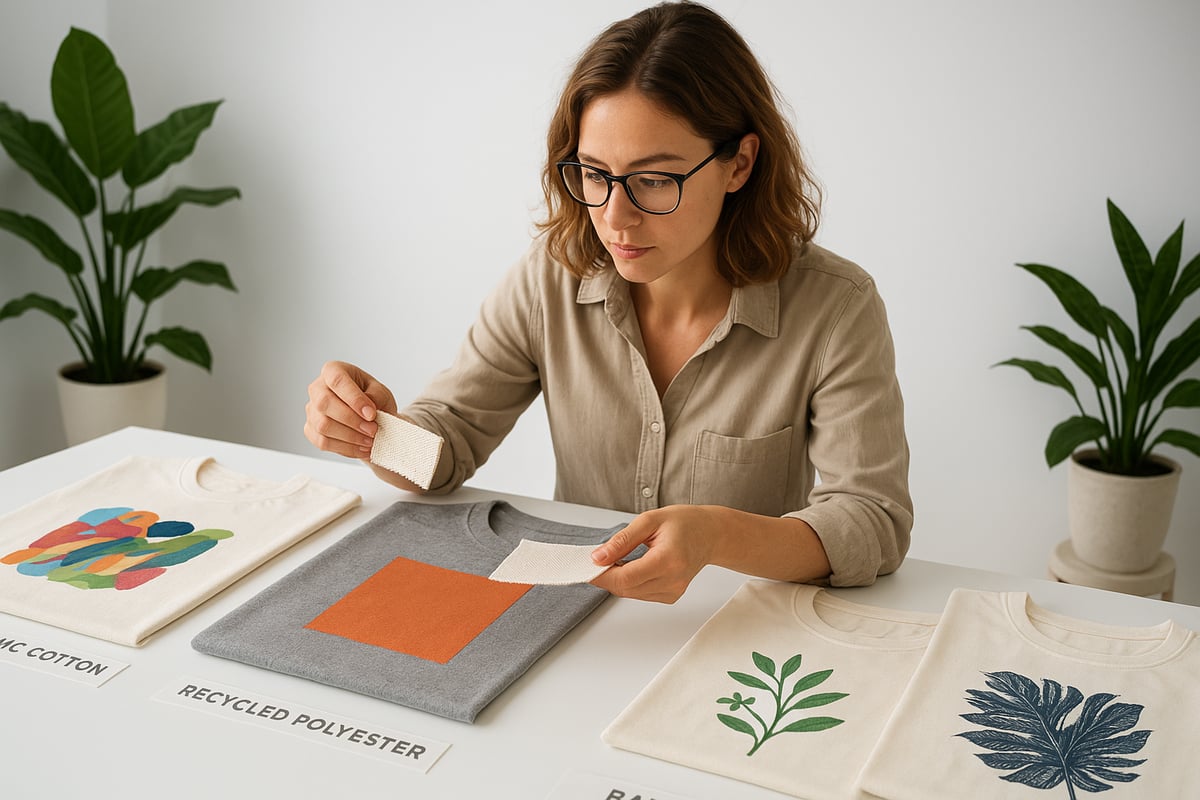
The fabric you choose sets the foundation for eco friendly t shirt printing. Not all methods work equally well on every material. For example, water-based inks thrive on organic cotton, while sublimation requires polyester, especially recycled options.
Fabric color and composition also affect print results. Lighter shades allow for brighter prints with less ink, while dark fabrics may need special treatments. Reviewing The Best T-Shirt Guide can help match materials to the most sustainable printing technique.
When selecting your method, consider:
- Type: Organic cotton, recycled polyester, hemp, bamboo
- Color: Light vs. dark, need for discharge or specialty inks
- Texture: Smoothness impacts print detail
Choose a printing solution that complements your chosen fabric for the best results.
Print Quality and Durability
Your customers expect t-shirts that look great and last. Print quality in eco friendly t shirt printing depends on factors like ink type, method, and curing process.
Some methods, like DTG with eco inks, deliver sharp, high resolution images, perfect for intricate designs. Others, such as natural dye printing, create subtle, earthy tones with unique character. Durability after washing varies: heat transfer may fade faster than reactive dye digital prints.
Key details to evaluate:
- Vibrancy and detail: How bright and crisp is the image?
- Hand feel: Is the print soft and breathable or heavy?
- Longevity: Will the print survive repeated washes?
Test samples before finalizing your approach to ensure your shirts meet quality standards.
Environmental Certifications and Standards
Certifications are crucial for proving your eco friendly t shirt printing process is truly sustainable. Look for inks, fabrics, and processes certified by GOTS, OEKO-TEX, or GRS. These standards guarantee reduced toxicity, ethical sourcing, and environmental responsibility.
Transparency in your supply chain builds trust with eco conscious customers. Ask suppliers for certificates and documentation. Traceability is increasingly important as regulations tighten and consumers demand proof of sustainability.
Checklist for certifications:
- GOTS: Organic textiles and inks
- OEKO-TEX: Tested for harmful substances
- GRS: Recycled content validation
Prioritize partners and materials that meet these global standards.
Cost, Scalability, and Production Needs
Balancing environmental benefits with business realities is key in eco friendly t shirt printing. Each method has unique setup costs, per unit prices, and scalability. For instance, digital printing is ideal for small, custom orders, while water-based screen printing scales for larger runs.
Consider your production goals:
- Initial investment: Equipment and training required
- Per-unit cost: Varies by method and order size
- Speed and flexibility: Turnaround time and customization options
Staying on top of Top T-Shirt Printing Trends can help you anticipate shifts in technology and consumer preferences. Evaluate your needs to select a process that supports both sustainability and business growth.
Innovations and Future Trends in Sustainable T-Shirt Printing
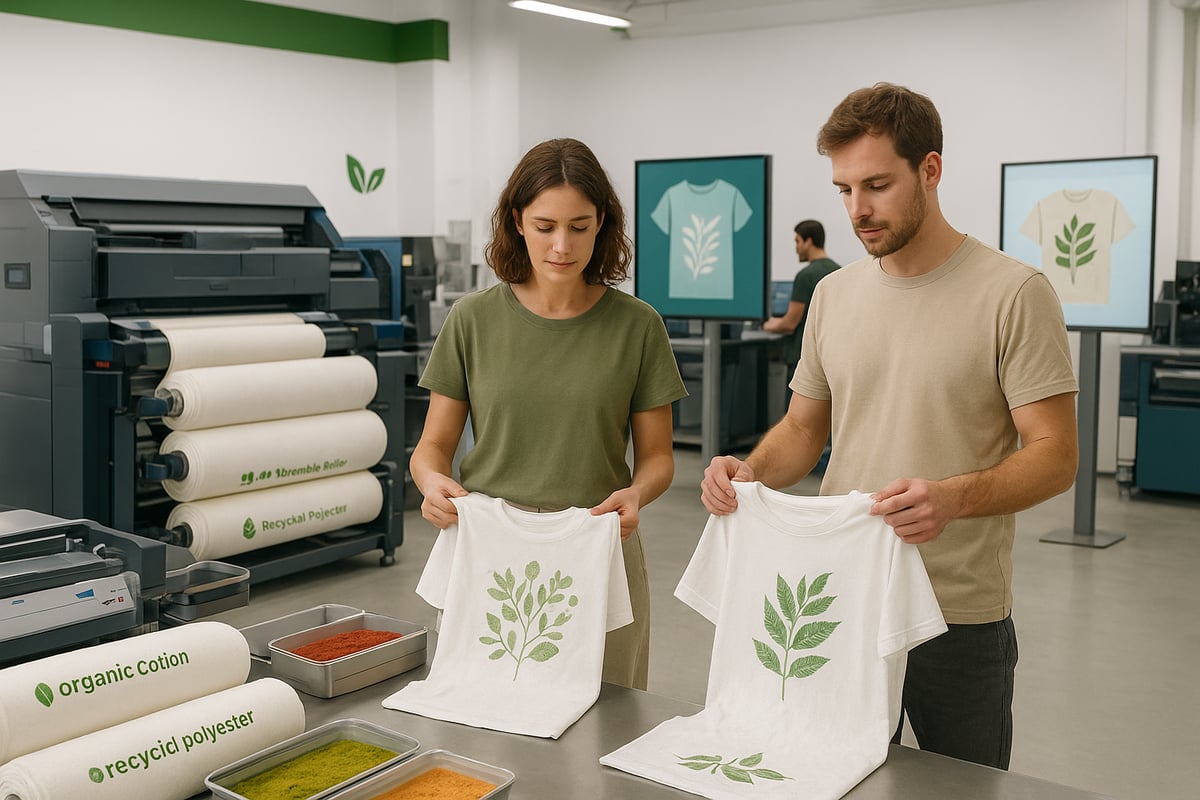
The future of eco friendly t shirt printing is being shaped by a wave of cutting-edge technologies and shifting consumer expectations. Brands and print shops are racing to adopt innovations that not only reduce environmental impact but also deliver exceptional style, comfort, and performance. Let’s explore the most exciting trends set to redefine sustainable apparel in 2025.
Advances in Biodegradable and Bio-Based Inks
One of the most promising trends in eco friendly t shirt printing is the rise of biodegradable and bio-based inks. Innovators are developing inks made from algae, soy, and other renewable plants, which drastically reduce toxicity and break down safely after use. Unlike traditional petroleum-based inks, these new options generate zero hazardous waste.
Why does this matter? The environmental impact of traditional printing methods has long been a concern, especially with toxic runoff and microplastics polluting waterways. With bio inks, brands can create vibrant, long-lasting prints while supporting a circular, earth-friendly approach.
- Algae-based inks: naturally renewable, low energy
- Soy inks: biodegradable, great color payoff
- Plant-derived pigments: unique, earthy tones
As consumer awareness grows, expect bio inks to become a key differentiator for eco friendly t shirt printing brands.
Automation and Digitalization for Waste Reduction
Smart automation is transforming eco friendly t shirt printing by slashing waste and optimizing every step. Next-generation printers use AI to analyze designs and control ink output, ensuring only the necessary amount is used on each garment. This means fewer misprints, less wasted fabric, and significant energy savings.
Digital print management systems also let brands track resource use in real time, making it easier to identify inefficiencies. As a result, print shops can offer personalized products while minimizing their environmental footprint.
- AI-powered design tools for efficient layouts
- Automated color calibration for precise results
- Real-time monitoring to reduce excess material
By embracing digitalization, the eco friendly t shirt printing industry is setting a new standard for both sustainability and operational excellence.
Closed-Loop and Zero-Waste Printing Facilities
Closed-loop systems are the next frontier in eco friendly t shirt printing. These facilities recycle water, recover energy, and reuse materials wherever possible. The result is a dramatic reduction in landfill waste and pollution.
Industry leaders are investing in advanced filtration to purify water after each print run. Some brands are even adopting circular supply chains, where used garments are collected, reprocessed, and reprinted. These innovations are not just driven by ethics but also by new regulatory measures in sustainable fashion that demand cleaner production.
- Water recycling for minimal resource use
- Energy recovery from heat and steam
- Circular supply chains for garment reuse
Zero-waste printing is quickly moving from vision to reality, making eco friendly t shirt printing more attainable for brands of all sizes.
Customization and On-Demand Eco Printing
Personalization is fueling a revolution in eco friendly t shirt printing. Print-on-demand technology allows brands to produce only what customers actually order, cutting down on overproduction and unsold inventory. This model is not only cost-effective but also significantly reduces waste.
Consumers crave unique, sustainable apparel, and on-demand printing delivers just that. Whether it’s a one-off design or a limited-edition run, digital systems make it easy to offer endless variations without sacrificing eco values.
- Print only what’s needed, when it’s needed
- No bulk inventory or unsold stock
- Supports artisan and independent creators
The future of eco friendly t shirt printing is bright, with customization and sustainability going hand in hand to meet both brand and consumer needs.
After seeing how eco friendly t shirt printing is changing the game for brands and the planet, you might be wondering—where can I actually find tees that look great, feel even better, and support a greener future? That’s exactly what we’re passionate about too. We’re all about comfy, cool après padel styles that are as kind to the earth as they are to your skin. If you’re ready to step into the new era of sustainable fashion and experience the difference for yourself, you can Shop now and join the movement for a cleaner, fresher way to wear your love for padel.